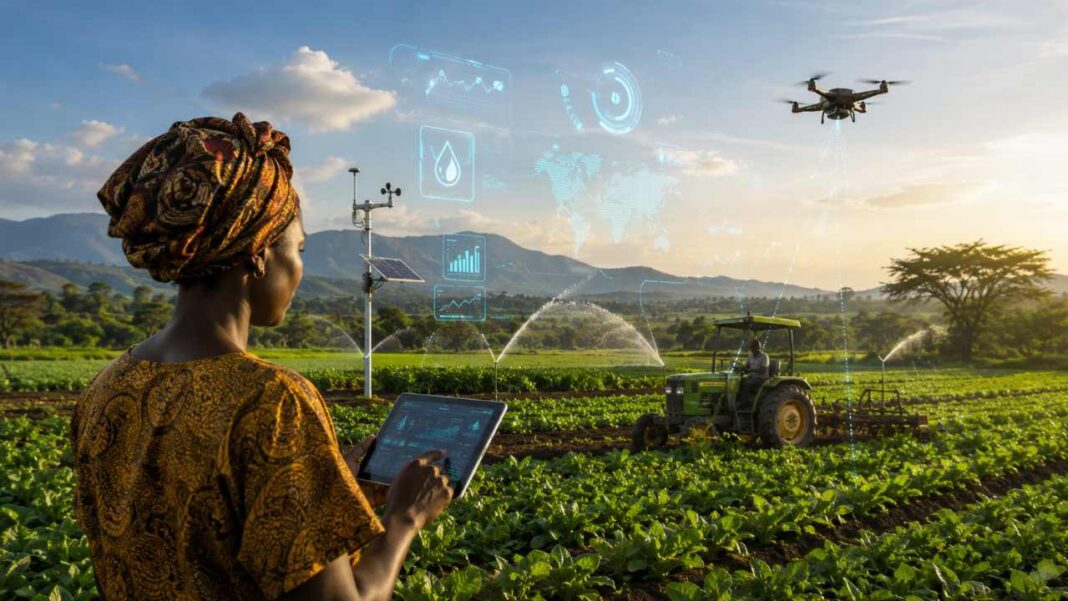

When one refers to Africa‘s fight to build more resilient and productive agricultural systems, artificial intelligence has increasingly been positioned as a powerful tool with the potential to transform the sector. While the use of AI in agriculture has already been on the rise, its adoption is expected to gain much more momentum through the third edition of the Innovate Africa Challenge, launched by Smart Africa in partnership with the Food and Agriculture Organization of the United Nations (FAO). The initiative is intended to accelerate the deployment and scaling of proven AI solutions, particularly those supporting climate-smart agriculture.
The main focus of the initiative, which is being held this year, is to identify practical AI-powered solutions which are capable of addressing some of the continent’s most pressing agricultural and climate-related challenges. Instead of just simply concentrating mainly on experimental ideas, this year’s challenge places a weight on technologies that have already shown potential and can be tested and expanded in real farming environments.
Artificial intelligence (AI) could offer farmers great support that is highly valuable in areas which range from crop forecasting and pest detection to the management of water and adaptation to climate. Real-time weather information can also be provided by smart farming technologies. It can also monitor crops and help producers in making decisions which are primarily based on changing the conditions of the environment.
The challenge illustrates how quickly agriculture in Africa is attempting to adapt to the pressures of climate change, which are increasingly affecting food production. Irregular rainfall, droughts and other extreme weather events continue to be a major threat for farmers, especially smallholders who often have limited access to technology and financial resources.
Applicants are encouraged to develop scalable and accessible solutions that can create measurable benefits for farming communities. The winning project will receive a US$50,000 service contract to support the deployment, validation and expansion of its technology with farmers.
According to Smart Africa, climate-smart agriculture is among the key areas where artificial intelligence can contribute by improving productivity while strengthening resilience to environmental changes.
By connecting innovators with agricultural challenges, the Innovate Africa Challenge hopes to demonstrate how artificial intelligence can become more than a technological trend, helping build farming systems capable of producing food.
Going beyond financial support, the challenge has been structured in order to help promising technologies move closer to practical use. Smart Africa’s program provides selected participants with opportunities to refine their solutions through training and technical support. The top 16 participants are expected to take part in a virtual onboarding program which is to go on for 2 weeks, while eight finalists will proceed to go on for a three-month incubation program. In the program, they will be able to receive support from experts in artificial intelligence and climate-related solutions. Five participants will then have the opportunity to present their solutions to a jury.
The program identifies several regions, most of which are Commonwealth countries. In the middle of it, Ghana, Kenya and Rwanda are identified as potential locations for the implementation of the selected solution. This focus on real-world deployment is an incredibly important part of the 2026 edition, as it aims to show positive results for farmers and at the same time will generate evidence that could support the replication and scaling of successful technologies all throughout Africa.
A growing interest is already seen by the wider agricultural sector in technologies that can help farmers respond to climate risks. Research published in 2026 highlights the potential of digital tools, including artificial intelligence, machine learning, remote sensing and Internet of Things technologies, to improve agricultural productivity and strengthen resilience in climate-vulnerable regions of Africa. However, the research also directly shows the challenges which involve digital infrastructure, financing, policy support and the ability to make these technologies accessible to farmers.
Similar efforts are also growing outside the challenge. In Kenya, a research program which is supported by the UK, launched in 2026, is examining how AI can responsibly help smallholder farmers respond to challenges which are related to climate, pests and soil. The project is intended to generate evidence on how digital technologies can improve farming outcomes while supporting food security and resilience for climate.
These developments suggest that AI is increasingly being considered as part of a much larger transformation of agriculture in Africa. However, the success of such technologies will ultimately depend on whether they can move beyond demonstrations and become affordable, accessible and useful tools for farmers and citizens. The Innovate Africa Challenge is attempting to connect that gap by taking proven solutions closer to implementation and measuring their impact in real agricultural settings.