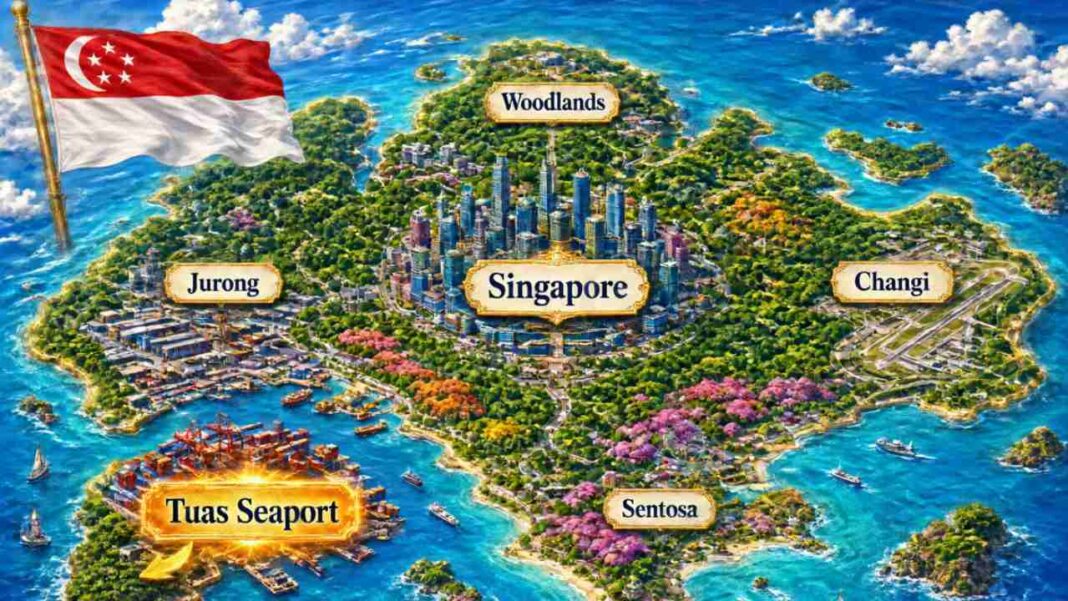

Singapore’s Tuas expansion is moving beyond conventional container handling as PSA develops a technology-driven supply chain hub designed to connect port operations, warehousing, distribution and cargo services within a single ecosystem.
Singapore’s strategy to strengthen its position at the centre of international trade is entering another phase with the development of the PSA Supply Chain Hub @ Tuas (PSCH), a major logistics facility designed to bring a broader range of supply chain activities closer to the country’s expanding Tuas Port.
On 18 October 2024, Singapore Prime Minister Lawrence Wong attended a groundbreaking ceremony to formally launch the project. PSA said the facility is scheduled to become operational in 2027 and will form an important component of the wider Tuas Port ecosystem.
Rather than treating the port simply as a location where containers are transferred between ships and land transport, the development reflects a broader shift toward integrated logistics. The planned hub will provide regional distribution and container-freight-station capabilities alongside additional value-added cargo services, allowing companies to manage more stages of their supply chains within Singapore.
Located beside Tuas Port inside the Free Trade Zone, PSCH is planned to occupy well over 2 million square feet. Its position is intended to give cargo owners, logistics companies and other supply-chain users direct access to the port while reducing the need to move goods between widely separated facilities.
Bringing more logistics functions closer to the port
One of the key objectives behind the development is to respond to changing cargo requirements. Singapore handles substantial volumes of transshipment cargo, but businesses do not always require an entire container for every shipment.
Some cargo needs to be consolidated before export, while other shipments need to be separated and distributed to different destinations after arriving in Singapore. The Singapore Prime Minister’s Office said the new facility is intended to expand capabilities currently associated with Keppel Distripark while adding technologies and services that may support a wider range of cargo-management requirements.
The consolidation of operations at Tuas is part of the longer-term transformation of Singapore’s port infrastructure. PSA has said that activities at Keppel Distripark will be consolidated at Tuas Port by 2027, alongside the movement of Singapore’s city-terminal operations towards the new western port complex.
This transition aims to establish a more concentrated logistics environment, allowing maritime, storage, distribution, and cargo-handling activities to operate in closer proximity.
Technology at the centre of the development
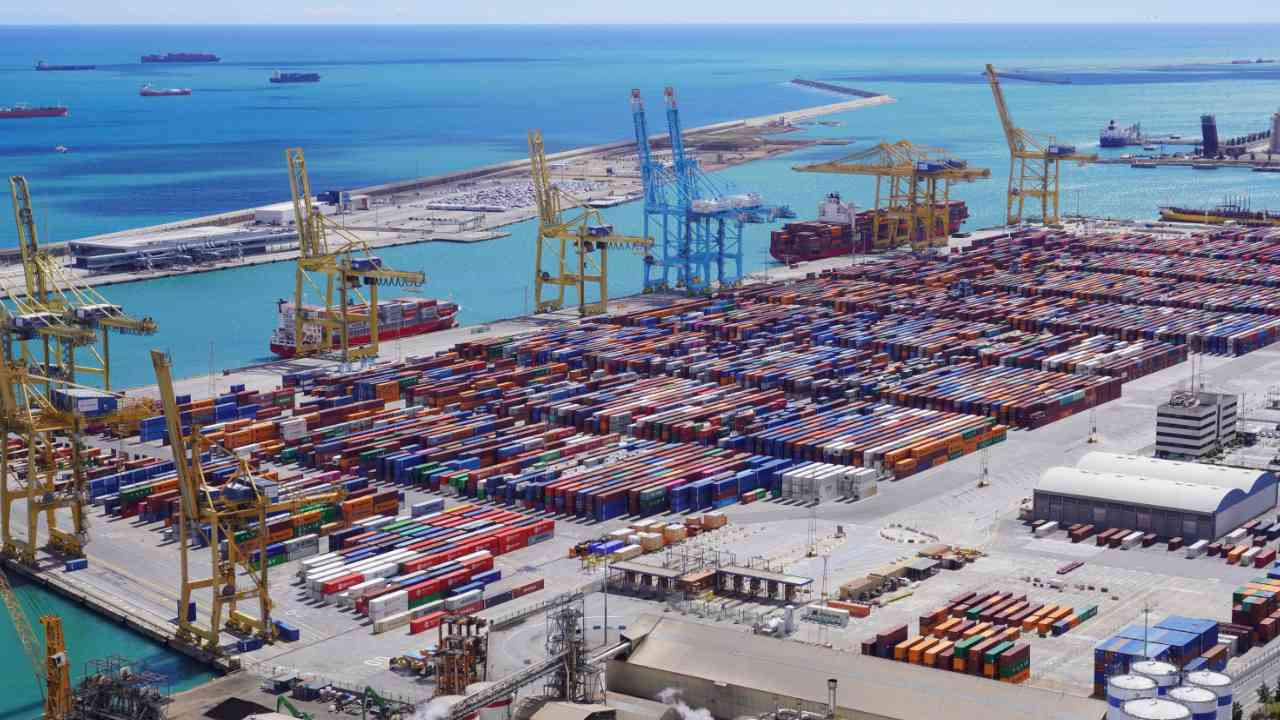
Automation is another defining feature of the new hub. PSA has outlined plans to use technologies, including Automated Storage and Retrieval Systems and its Intelligent Warehouse eXchange platform. These systems aim to enhance cargo movement, storage, and visibility, enabling logistics operators to respond more swiftly to evolving customer demands.
The development also reflects the growing importance of digital coordination in modern freight networks. Instead of viewing individual warehouses, terminals, hauliers and distribution facilities as separate operations, PSA is seeking to connect them as parts of a wider network.
That approach is becoming increasingly relevant as manufacturers and retailers seek greater visibility over shipments and greater flexibility when international trade conditions change.
Tuas becoming a larger trade ecosystem
The Supply Chain Hub is being developed alongside the continuing expansion of Tuas Port itself. In August 2026, PSA announced that Tuas Port had handled 25 million TEUs since operations began 4 years ago in September 2022. The terminal had 14 operational berths at that point and was on track to reach 18 by 2027.
The scale of the port provides the foundation for PSA’s wider ambition. Singapore’s existing container terminals have a combined handling capacity of 46.5 million TEUs, while the eventual Tuas development is planned to have an annual capacity of up to 65 million TEUs when fully completed in the 2040s.
PSA’s strategy therefore extends beyond expanding quay capacity. The company describes its approach as building stronger connections between strategic ports and logistics facilities so that cargo may move through a coordinated network rather than through isolated service points.
Sustainability incorporated into the design
The hub also incorporates environmental considerations. PSA has identified renewable-energy sources, sustainable drainage systems and energy-efficient building features among the planned sustainability measures for PSCH. These initiatives form part of the company’s wider effort to reduce emissions across its operations.
The design of the wider Tuas development also incorporates electrification and automation. Singapore’s Urban Redevelopment Authority notes that the port will use electric equipment and vehicles, rooftop solar generation and smart-grid systems intended to optimise energy consumption.
A logistics platform for regional trade
PSA’s plans have also attracted interest from major supply-chain partners. In 2025, PSA Singapore and COSCO announced discussions concerning dedicated warehouse and logistics capabilities within PSCH. The proposed collaboration is intended to support cargo flows involving Southeast Asia, China and the wider Asia-Pacific market.
For Singapore, the significance of PSCH therefore extends beyond the construction of another warehouse complex. Its development represents an attempt to connect the country’s maritime gateway with a broader set of logistics services, creating an environment in which cargo can be handled, stored, consolidated, distributed and digitally coordinated within a more closely integrated network.
As Tuas continues to expand, the Supply Chain Hub is expected to become one of the important pieces of that transformation. The objective is not simply to move more containers but to create a logistics platform capable of supporting increasingly complex regional and global supply chains while combining connectivity, automation, and operational efficiency besides sustainability.